3d Rendering Junk Food Voxel Art
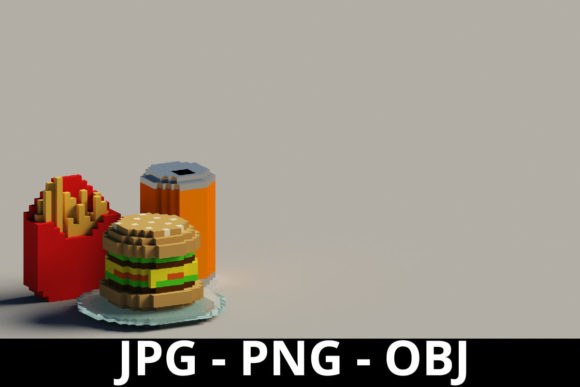
When you first encounter 3d rendering junk food voxel art, it often looks like a playful, nostalgic throwback to early video games. The chunky, pixelated aesthetic transforms familiar fast-food items—like crispy french fries, cheesy burgers, and fizzy soda—into charming digital objects. However, beneath the cute exterior lies a powerful tool for designers, marketers, and content creators who need to capture attention without overwhelming their audience.
This style is not merely about making food look "blocky." It is a specific design choice that balances clarity with visual interest. Whether you are building a mobile game menu, creating an infographic about nutrition, or designing a unique wallpaper, understanding the nuances of this format is crucial. Many professionals jump straight into downloading assets without considering how they will be used, leading to projects that look disjointed or fail to load efficiently. Before you add another file to your ZIP folder, let's explore what makes these assets truly effective and where common pitfalls lie.
Understanding the Aesthetic and Utility
The appeal of voxel art lies in its geometric simplicity. By reducing complex textures of lettuce, tomato, and cheese into distinct cubes, the rendering process creates a clean, stylized look that scales well across different screen sizes. This is particularly valuable when dealing with fast food concepts that need to communicate quickly. A high-fidelity photorealistic render might take seconds to load on a mobile device, but a well-optimized voxel model remains crisp and instant.
For entrepreneurs and small business owners, this style offers a way to present unhealthy or calorie-dense topics in a lighthearted, non-threatening manner. Imagine a health app warning users about excessive sugar intake; using a realistic photo of a greasy burger might feel too harsh. In contrast, a colorful 3d icon of a hamburger made of voxels feels approachable, allowing the message to land without triggering immediate defensiveness.
Common Pitfalls in Selection and Usage
Despite its charm, integrating voxel art requires more than just grabbing the most colorful image available. One of the most frequent mistakes is ignoring the technical specifications of the files within a package. A typical ZIP folder might contain JPG, PNG, and OBJ 3D formats, but using them interchangeably can ruin your project's quality.
- Mixing Resolutions: Using a low-resolution JPG as a background while trying to overlay high-definition text creates a jarring visual experience. The pixelation of the food contrasts poorly with sharp typography, making the entire presentation look amateurish.
- Ignoring Transparency: When selecting assets for a menu or interface, assuming all images have transparent backgrounds is a dangerous assumption. If you place a yellow or orange rendered object onto a white webpage without checking for a proper alpha channel, you will end up with a white box surrounding your fries.
- Overlooking File Weight: While 3d rendering sounds heavy, voxel models are generally lighter than photorealistic ones. However, if you import a massive OBJ file into a web environment without optimizing the polygon count, you risk slowing down your site. This affects user retention and SEO performance directly.
Why Format Matters for Your Project
The choice between a static image and a 3D object depends entirely on your end goal. If you are creating a wallpaper presentation or a social media banner, a high-quality PNG with transparency is usually sufficient. These files allow you to layer the fat cheeseburger or the crispy potato over any background color seamlessly.
However, if you are developing a game or an interactive educational tool, the OBJ 3D component becomes essential. This format allows you to rotate the meal, zoom in on the details of the bun, or animate the drink being poured. Without the correct 3D file, you lose the ability to create dynamic interactions that engage users. Beginners often skip the 3D file, thinking the 2D images are enough, only to realize later that they cannot achieve the depth needed for their specific application.
Evaluating Quality and Consistency
Not all voxel packs are created equal. When evaluating a collection of graphic elements, consistency is key. A set of fastfood icons should share the same lighting direction, block size, and color palette. You might find a pack where the soda is bright red and glossy, but the cola drink next to it is dark brown and matte. This inconsistency breaks the immersion and makes the design feel like a collage of unrelated parts rather than a cohesive system.
Another overlooked detail is the color accuracy. In voxel art, colors are often limited by the palette. If the green of the lettuce looks muddy or the yellow of the cheese appears too neon, the overall perception of the food changes. For a designer, this can mean the difference between a appetizing illustration and something that looks artificial or unappealing.
Practical Steps for Better Results
To avoid these common errors, start by defining your usage scenario clearly. Are you creating a static background or an interactive object? Once you know this, filter your asset search accordingly. Always preview the isolated elements against your intended background color before purchasing or downloading. Check the metadata of the rendering files to ensure they meet your resolution requirements.
If you are working with 3d illustration software, test the OBJ files in your specific engine before committing to a large batch. Look for artifacts or missing textures that might occur during the export process. Furthermore, consider the context of your content. Using junk food imagery in a serious medical context requires a very different tone than using it in a fun gaming environment. Adjust the saturation and lighting of your voxels to match the mood you intend to convey.
Finally, respect the limitations of the format. Voxel art thrives on simplicity. Trying to force hyper-realistic textures onto a blocky model often results in a confusing hybrid that satisfies neither aesthetic nor functional needs. Embrace the blocky nature of the 3d icon. Let the calories and carbs be represented by the sheer volume of the blocks, not by fake texture maps.
Conclusion
Mastering 3d rendering junk food voxel art is less about finding the perfect image and more about understanding how to integrate it effectively into your workflow. By paying attention to file formats, maintaining visual consistency, and respecting the stylistic constraints of the medium, you can create engaging visuals that serve your purpose perfectly. Whether you are a freelancer looking to stand out or a business owner wanting to modernize your digital presence, taking the time to evaluate these assets carefully will save you time and elevate the quality of your final output.